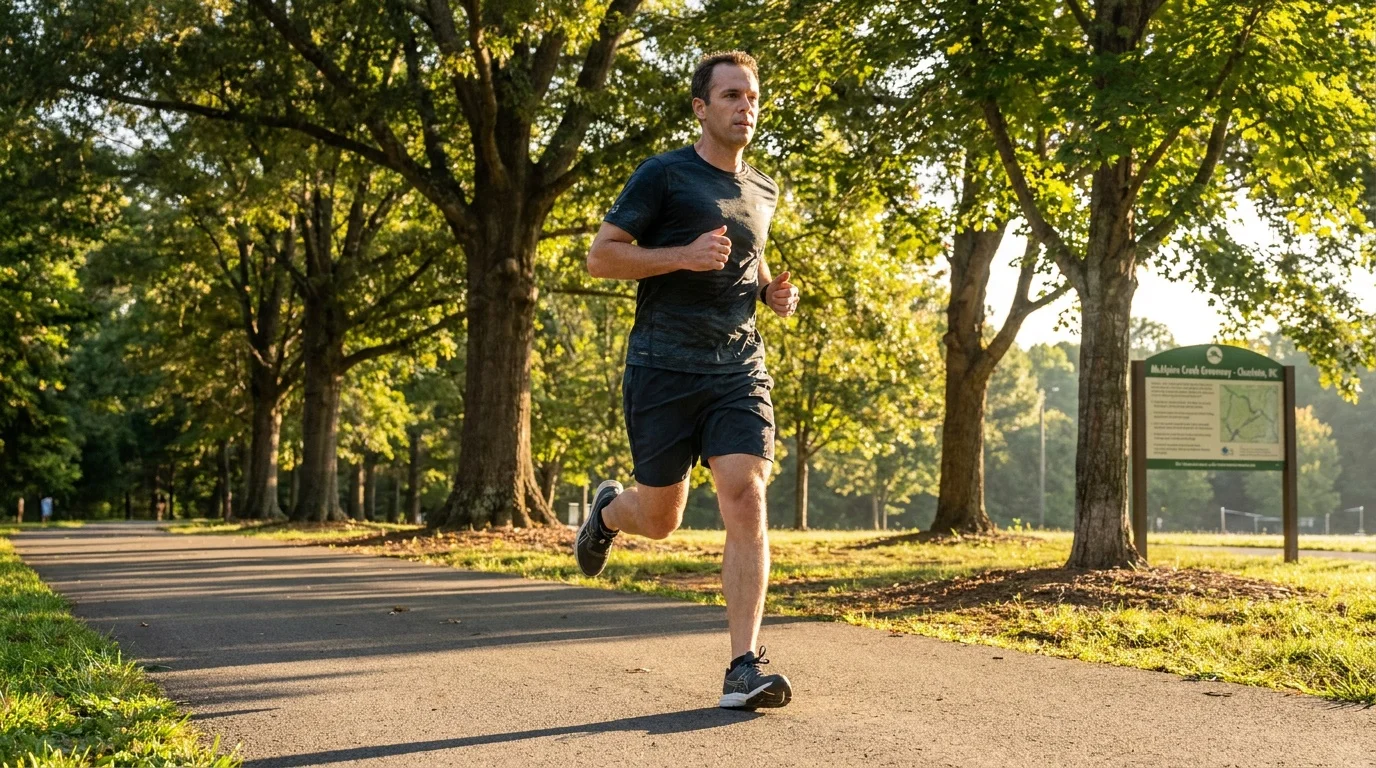
You're a few miles into a run when it starts. A dull ache behind or around your kneecap that won't go away.
Maybe you've been pushing your mileage. Maybe you're ramping up for a race. Maybe you just got back into a routine after some time off.
Whatever the trigger, runner's knee has a way of showing up at the worst time and sticking around way longer than it should.
At Monarch Performance PT, we see runner's knee (aka patellofemoral pain syndrome) more than almost any other running injury.
The frustrating truth?
Runner's knee is rarely just a knee problem. The pain is in your knee, but the cause usually isn't.
What Is Runner's Knee?
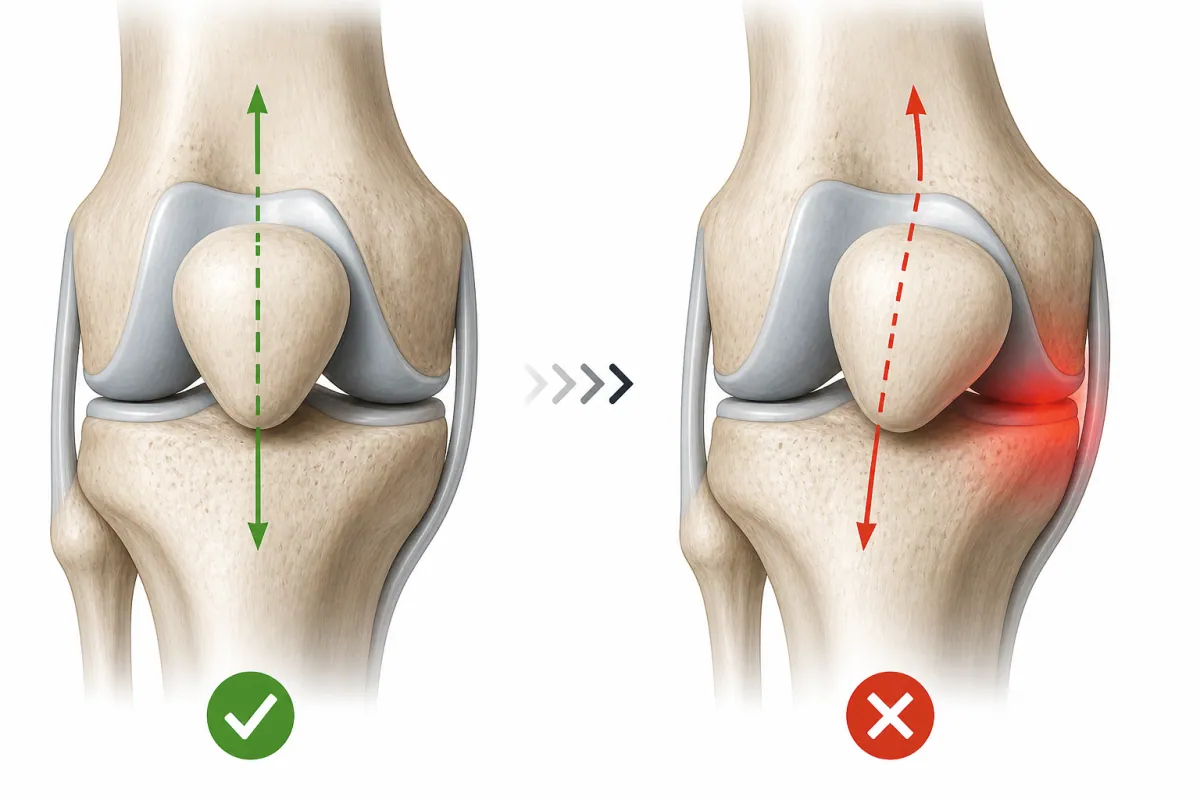
Runner's knee is an umbrella term for pain at the front of the knee, specifically around or behind the kneecap (patella).
It's also one of the most common overuse injuries in runners, cyclists, hikers, and active adults.
Common Symptoms
Most people describe it as:
A dull ache around or behind the kneecap
Pain after sitting for a while (you stand up and it feels stiff and tight)
More discomfort going downstairs or downhill
Pain that builds during a run, not always right away
Sometimes clicking, grinding, or just "feeling off"
If that sounds like you, you're not alone. And more importantly, this is fixable.
Why Does Runner's Knee Happen?
Runner's knee is almost always driven by a combination of factors above and below the knee.
Here's what we actually look for:
Weak hips and glutes
When the hip abductors and external rotators aren't doing their job, the femur collapses inward during the loading phase of your stride. This is a movement pattern called dynamic knee valgus.
This shifts how the kneecap tracks and creates uneven stress distribution with every single step. You may not even notice it happening, but we'll see it in your movement screen immediately.
Quad dominance and quad tightness
When the quadriceps are significantly stronger than the posterior chain, meaning your glutes and hamstrings, your knee absorbs force it shouldn't be absorbing on every landing.
But it's not just about strength imbalance. Chronically tight quads pull directly on the patella through the quadriceps tendon, altering how it sits in its groove and how it tracks under load.
Poor foot mechanics
Excessive pronation, meaning feet collapsing inward, alters the alignment of the entire lower limb chain and adds extra rotational stress to the knee with every footstrike.
Training load errors
A sudden spike in weekly mileage, adding hills or track work too soon, returning from a break without a proper buildup. All of these overwhelm tissue capacity before your body has adapted.
What Won't Fix Runner's Knee
Rest alone. Rest is a pause, not a treatment. Return to the same training load with the same movement patterns and you'll be right back where you started.
Ice and anti-inflammatories. Useful for managing symptoms short-term. They do nothing to address why the kneecap is tracking poorly.
IT band stretching. One of the most common recommendations you'll find online, and one with very limited evidence for patellofemoral pain. It's not useless, but if that's the whole plan, it's missing the point.
Aggressively stretching your quads too soon. This one is important and often gets people into more trouble. It feels intuitive. Tight quads, stretch the quads. But passive quad stretching in the early stages of runner's knee can actually increase the pull on the patella and aggravate the very tissue you're trying to calm down. Before you start loading the quad into a stretch, you need to address the tissue quality and the underlying mechanics first. Stretching comes later.
What Actually Works
Effective treatment starts with identifying the root cause of your specific presentation, not plugging you into a generic knee protocol and hoping for the best.
Here's how we approach it at Monarch Performance PT:
1. Find the root cause
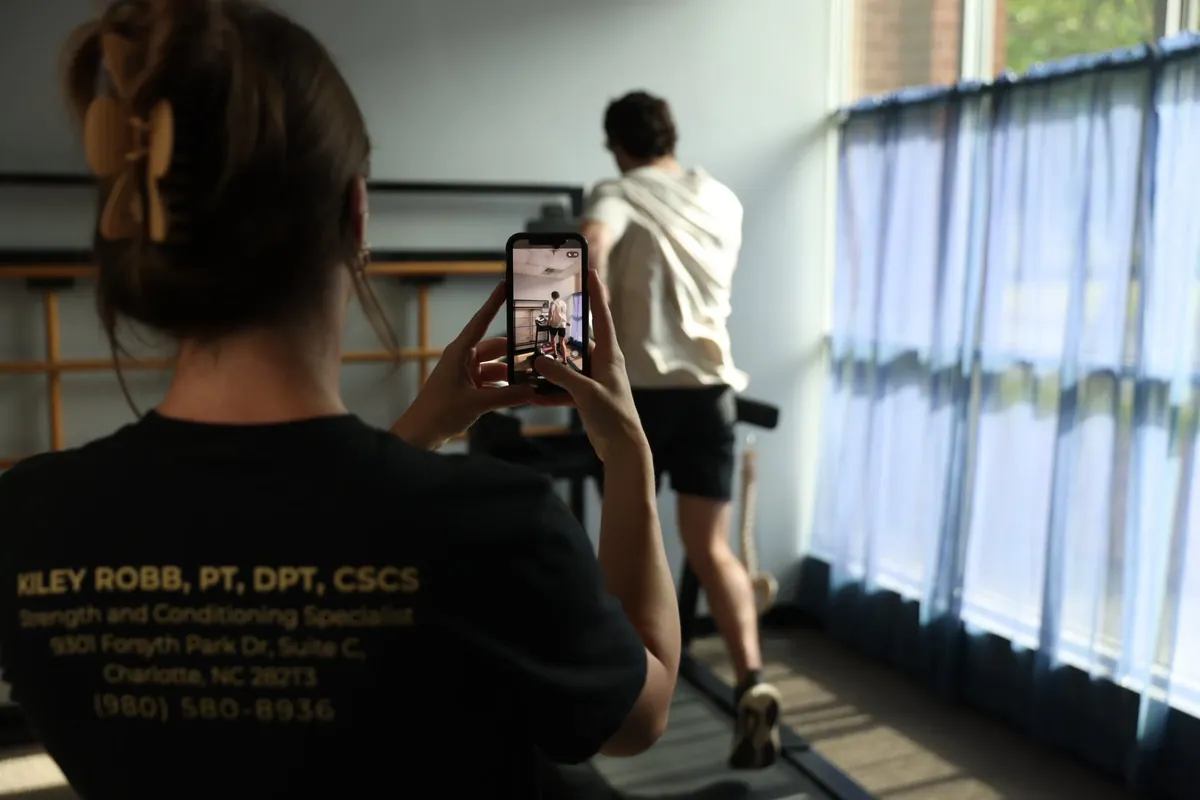
Before we do anything, we run a thorough movement and strength assessment. How you squat, hinge, land, and load. We look at hip strength, quad-to-posterior chain balance, foot mechanics, and running gait if needed.
Most people leave the first session with more clarity on what's actually going on than they've had in months of dealing with this.
2. Manual therapy to restore tissue quality
If your quads are chronically tight and pulling on the patella, we address that directly. Hands-on soft tissue work to the quadriceps, hip flexors, and surrounding structures to restore normal tissue extensibility and take that constant tension off the kneecap.
This isn't just massage. It's targeted work designed to change how tissue behaves under load, and it creates the environment where exercise actually sticks.
3. Targeted strengthening
This is where the real work happens:
Progressive hip strengthening so your hips do their job and your knee stops taking the hit
Eccentric quad loading, one of the most evidence-backed interventions for patellofemoral pain
Posterior chain work to correct the strength imbalance driving the problem
4. Movement retraining
Strength without better movement patterns will only take you so far. We work on squat mechanics, landing mechanics, and running form.
5. A structured return to running
We don't just clear you and send you on your way. We build a progressive return-to-run plan that reintroduces load gradually so your tissues have time to adapt.
Most runners we work with are back to full training within 6 to 10 weeks. Some sooner. The timeline depends on how long the issue has been building.
Ready to Stop Guessing?
Look, if your knee has been nagging you for weeks and nothing has stuck, it's probably time to just get it looked at.
We work with runners, athletes, and active people in Charlotte who are tired of being told to "just rest it."
If that's you, click the link below and book your no commitment free initial phone call!