You're a few miles into a run and it starts. A sharp, burning pain on the outside of your knee that gets worse the longer you go. You stop, walk it off, and it fades. You start running again and it comes right back.
Maybe you've tried foam rolling your IT band until it's bruised. Maybe you've stretched it religiously before every run. Maybe someone told you to just rest it for two weeks and it'll go away.
And yet here you are, still dealing with it.
IT band syndrome is one of the most common running injuries we see at Monarch Performance PT. It is also one of the most mismanaged. The standard advice runners get is almost always the same: stretch it, foam roll it, rest it. And it misses the actual problem almost entirely.
Here's what's really going on.
What Is IT Band Syndrome?
The iliotibial band is a thick band of connective tissue that runs along the outside of your thigh from your hip down to just below your knee. It doesn't contract like a muscle. It's not designed to stretch. Its job is to provide lateral stability to the hip and knee during movement.
IT band syndrome, or ITBS, develops when there is excessive friction and compression at the lateral knee as the IT band repeatedly passes over a bony prominence called the lateral femoral epicondyle.
Every time your knee bends and straightens during your stride, that tissue compresses against the bone. Do that for thousands of steps per run and the tissue gets irritated, inflamed, and eventually angry enough to stop you mid run.
The pain typically shows up at around the same distance every time. That is not a coincidence. It is a sign of tissue that has hit its threshold.
Why Stretching and Foam Rolling Aren't Enough
This is the part most runners need to hear.
The IT band is not a muscle. You cannot stretch it. Research has shown that the iliotibial band has very limited extensibility, meaning the amount of actual tissue lengthening you achieve from a standing IT band stretch is minimal.
What you're mostly stretching is the TFL, the tensor fasciae latae, a small muscle at your hip that feeds into the top of the IT band.
Foam rolling has a similar problem. There is a reason foam rolling your IT band feels like the worst thing in the world. The tissue is extremely dense and compressed against a bony surface.
You are not releasing tightness. You are compressing an already irritated structure and hoping the pain response means something is working.
What's Actually Driving It
When we assess a runner with IT band syndrome at Monarch, here is what we are actually looking for:
Hip abductor and glute weakness. This is the big one. When the glute medius and hip abductors are not doing their job, the femur drops and internally rotates during the loading phase of your stride. This increases the compression force on the IT band at the lateral knee with every single step. Most runners with ITBS have notable weakness here and have no idea.
Hip extension deficits. Limited hip extension forces your body to compensate by rotating the pelvis and increasing lateral trunk lean during your stride. Both of those compensations increase IT band tension.
Running cadence and crossover gait. Runners who crossover at midstance, meaning their foot lands across the midline of their body rather than underneath their hip, dramatically increase the lateral load at the knee. Adjusting cadence and widening the stride can reduce symptoms quickly, but it does not fix the underlying mechanics driving the crossover.
Training load errors. A sudden mileage spike, adding hills without building up to them, back to back long runs without adequate recovery. IT band syndrome loves a training error. The tissue has a load capacity and when you exceed it too fast, it fails.
What Actually Works
Fixing IT band syndrome for good requires addressing the actual drivers, not just managing symptoms.
Load management first. You do not have to stop running entirely in most cases, but you do need to pull back enough to allow the tissue to calm down. Running through full pain is not productive. Running at a reduced volume and intensity while you address the underlying mechanics is.
Hip and glute strengthening. Progressive, targeted strengthening of the hip abductors and glute medius is the cornerstone of ITBS rehab. Side planks, lateral band walks, and single leg stability work are a starting point. The real goal is building enough hip strength that it holds up under the demands of your actual training, not just in a clinic exercise.
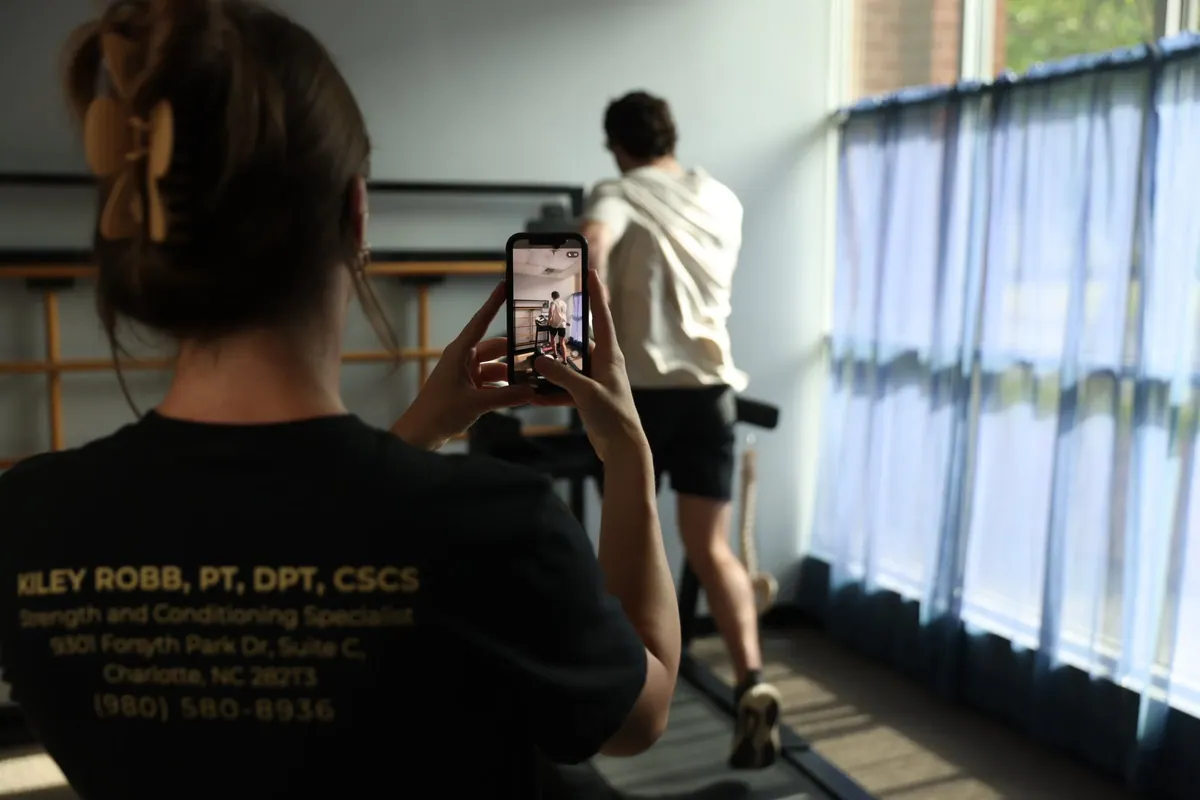
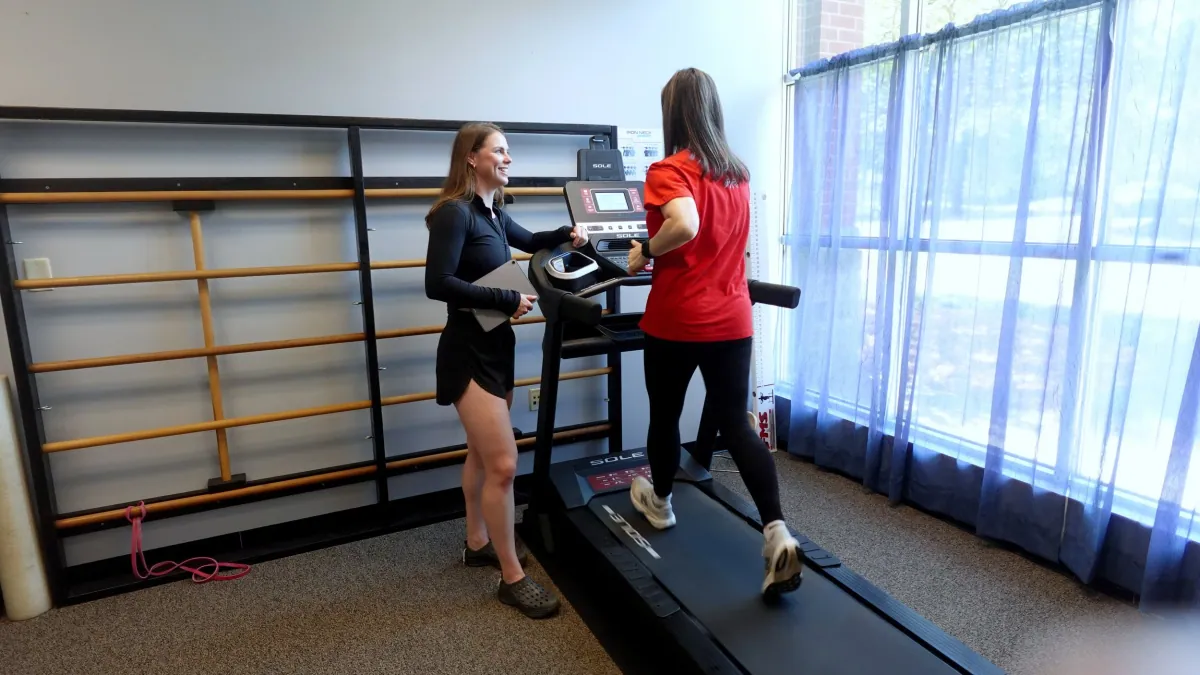
Running gait retraining. If crossover gait or excessive lateral trunk lean is driving your compression, we address it directly. Small changes to how you run can have an immediate effect on IT band load. This is something we address during your assessment when clinically appropriate.
Gradual return to full training. Once symptoms are calm and strength is where it needs to be, we build back your mileage systematically. No more guessing at when you can run again. Just a clear progressive plan with benchmarks to tell you where you are.
The Bottom Line
IT band syndrome is not a stretching problem. It is not a foam rolling problem. It is a movement and loading problem that requires an actual plan to fix.
If you have been dealing with lateral knee pain that keeps coming back no matter what you try, it is time to get to the root of it.
At Monarch Physical Therapy, we work with runners in Charlotte, Pineville, Fort Mill, and Ballantyne who are tired of the same advice that is not working. Every session is one full hour, one on one, built entirely around getting you back to running without constantly managing symptoms.
And please, please stop trying to stretch your IT band.