If you've been Googling "sports physical therapy in Charlotte" lately, you've probably already noticed something.
There are a lot of options.
PT clinics everywhere. Some inside hospital systems. Some in strip malls next to a nail salon and a pizza place. Some that see twenty patients a day and send you home with a printout of exercises you could have found on YouTube.
And then there are the ones that are actually built for athletes.
This blog is for athletes trying to figure out the difference: what sports physical therapy actually is, what a good sports physical therapist should look like, and what you should be asking before you commit to working with someone.
What Is Sports Physical Therapy?
This is a fair question because the term gets thrown around a lot.
Standard PT and sports PT can look completely different depending on where you go. Traditional outpatient PT is often built around insurance volume: 45-minute sessions, multiple patients at once, a tech doing your e-stim while your PT is down the hall with someone else. It gets the job done for certain populations, but if you're an athlete trying to return to performance, it usually falls short.
Sports physical therapy is different in a few key ways.
The first is the lens. A sports PT isn't just asking "how do we get you out of pain?" They're asking "how do we get you back to your sport, at the level you were at, without this coming back?" Those are very different questions and they lead to very different treatment plans.
The second is the goal. General PT is often discharged when pain goes away. Sports rehab doesn't stop there. Pain going away is the floor, not the ceiling. The goal is full return to training, competition, and performance, with the strength and capacity to actually stay there.
The third is who's in the room. A true sports PT has clinical training specific to athletic populations. Ideally, they also have a strength and conditioning background so they understand the demands of your sport, not just the anatomy of your injury.
What Brings Most Athletes Into a Sports PT's Office?
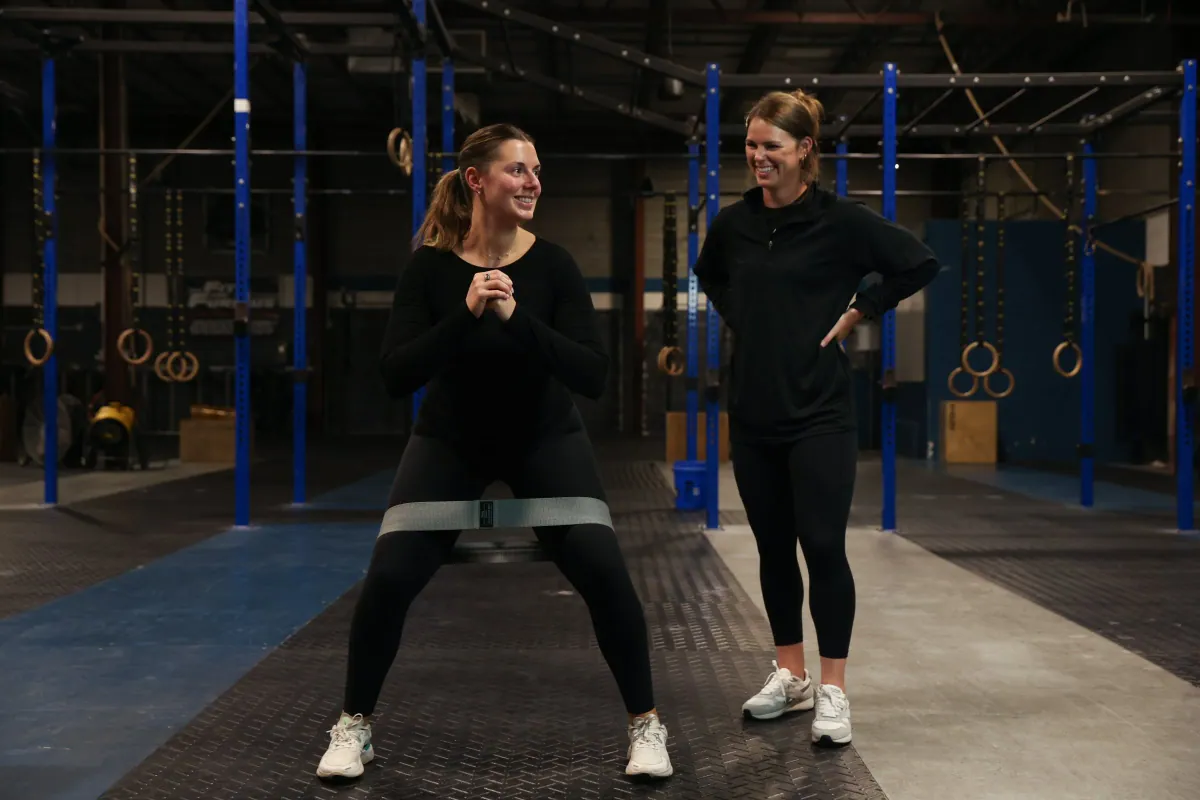
In Charlotte, I work with a pretty wide range of athletes: CrossFitters, runners, triathletes, weekend warriors, former college athletes who are still trying to train like college athletes (no judgment, I see you). The injuries that show up most often look something like this:
Shoulder pain. Overhead athletes, CrossFit athletes, swimmers: the shoulder takes a beating. Rotator cuff irritation, labral issues, impingement. What most people don't realize is that the shoulder is almost never the whole story. Thoracic mobility, scapular control, hip stability: all of it feeds into how your shoulder functions under load.
Knee pain. Runner's knee, patellar tendinopathy, meniscus irritation. And the knee is usually where you feel it, but it's not usually where the problem lives. The hip and the ankle tell the knee how to behave. If you treat just the knee, you're managing the symptom, not the cause.
Lower back pain. Deadlifts, squats, Olympic lifting: all high-demand movements for the lumbar spine. The back usually starts complaining when there's a movement pattern that's been breaking down quietly for months. By the time it becomes painful, the pattern has usually been there for a while.
Hip and groin issues. Hip flexor tightness, labral irritation, hip impingement. This one gets misdiagnosed all the time. Very common in runners and athletes who do a lot of squatting and lunging patterns.
Achilles and ankle problems. Tendinopathy, chronic ankle instability, plantar fasciitis. The research on Achilles management is clear: progressive loading is what fixes tendons, not rest. But most people don't hear that until they've already been through multiple rounds of rest-recover-flare-up-repeat.
These aren't just a Charlotte thing. But the way sports PT handles them here matters a lot depending on where you go.
Physical Therapy for Athletes, Sport by Sport
Sports physical therapy should look different for a pitcher than it does for a marathoner. Here is how I approach the athletes I see most.
HYROX athletes. Eight kilometers of running broken up by eight functional stations creates its own pattern of overuse injuries. I have raced HYROX myself, so I know what the race demands and what the training block before it looks like. More on my HYROX physical therapy page.
Baseball and softball players. I played Division II softball at Valdosta State and earned All-American recognition, and I completed advanced training at Champion PT and Performance in Boston with overhead athlete specialists. Throwing mechanics, arm care, and return-to-throwing progressions are built into every plan for my baseball and softball athletes.
ACL rehab. I use limb symmetry testing, hop testing, and handheld dynamometry with the VALD Dynamo, so your return to sport is based on numbers, not on a date on the calendar. Here is how my ACL rehabilitation in Charlotte works.
Runners. Whether you are chasing a half marathon PR or the IT band flares up every time your mileage climbs, I look at training load, how you run, and your hip and ankle mobility, then build a return-to-run plan around your race schedule. See running injury rehab.
CrossFit athletes. Barbell cycling, gymnastics, and high-rep conditioning under fatigue create injury patterns most generalist clinics are not built for. Shoulder pain overhead, low back flare-ups on heavy pulls, and knee pain in squats and box jumps are the big ones. More on CrossFit physical therapy.
What a Good Sports PT Evaluation Should Actually Look Like
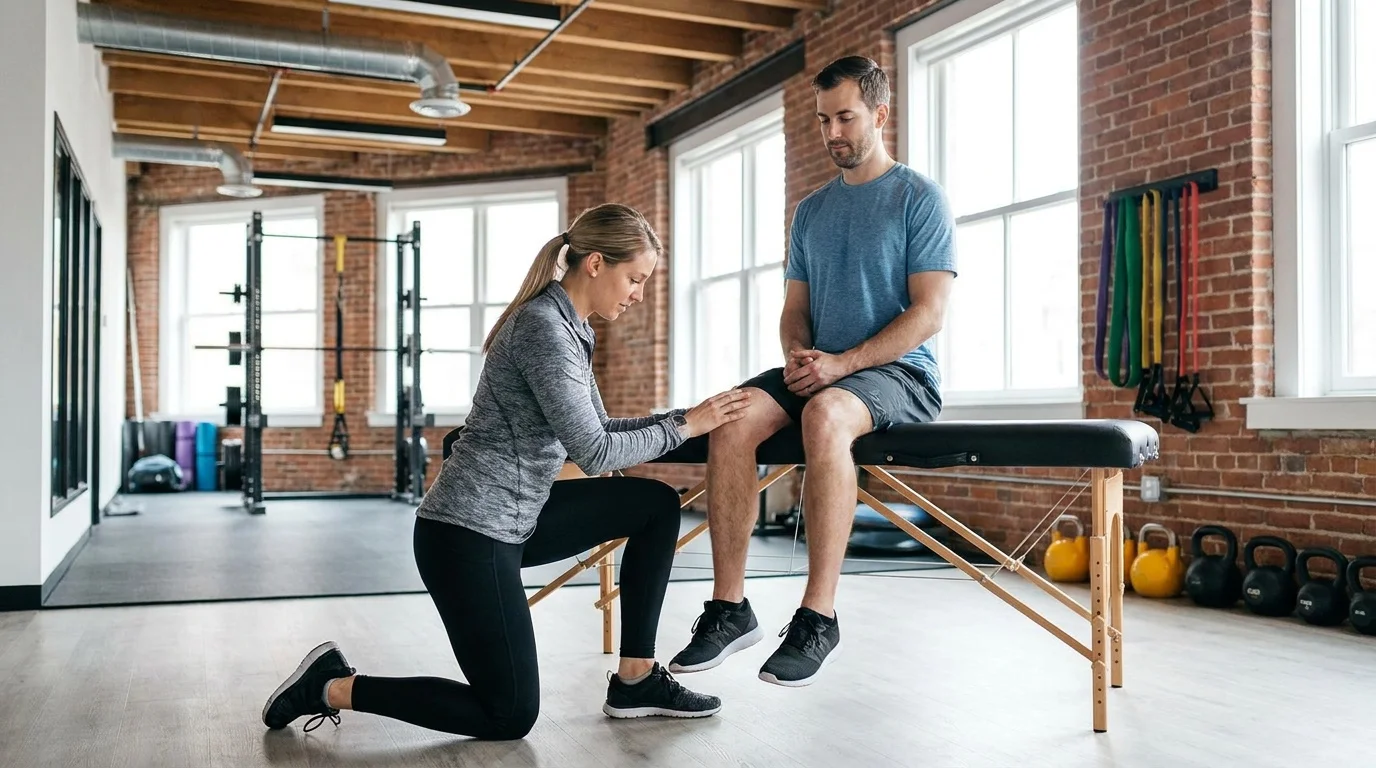
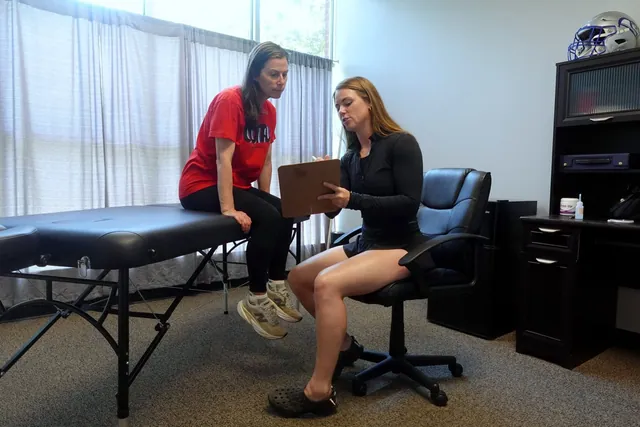
A real sports PT evaluation starts with actually getting to know you as an athlete. That means a full history, not just what hurts but how long you've been training, what your weekly schedule looks like, what lifts you're currently doing, where you are in a training cycle, and what your goals are.
Are you trying to get back to competing? Hit a PR? Just get through a workout without pain?
That context shapes everything.
From there it should get specific. What does your squat pattern look like? Your hinge?
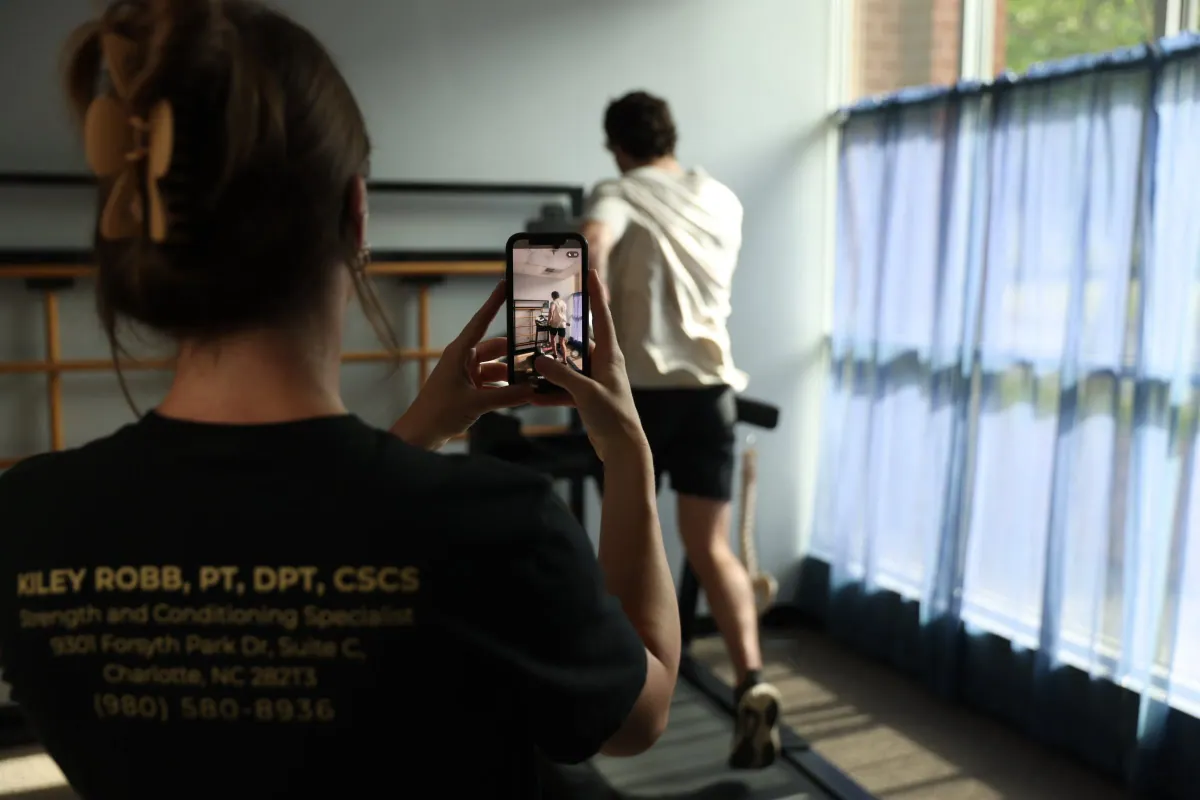
If you're a runner, your PT should be watching you run, not just asking you to describe how it feels.
If your pain shows up during a snatch or a clean, those are the things we need to see. You can't assess what you're not willing to actually look at.
The physical side should be thorough. Full body range of motion. Strength testing, not just the painful side but both sides so we can identify real asymmetries. Joint mobility. How your hips move. How your thoracic spine rotates. How your ankle dorsiflexion holds up under load. Pain is almost never isolated to one structure and a good evaluation reflects that.
By the end of a proper eval, you shouldn't be walking out with a vague plan and a follow up appointment. You should know exactly what's going on, why it's happening, what we're going to do about it, and what the realistic timeline looks like.
At Monarch, every first session is a full hour. We go through your training history, your goals, and your movement before we ever talk about treatment. I want to see you do the things that hurt. I want to know what your training week actually looks like. And I want you leaving that first session with answers, not just a diagnosis code and a home exercise program you printed off a sheet.
That's what you should expect. If that's not what you're getting, ask why.
What "Return to Sport" Actually Means (And Why Most Clinics Don't Get There)
This is probably the biggest gap I see in how sports rehab gets delivered.
Return to sport isn't when your pain is gone. Return to sport is when you can do your sport at full intensity, under fatigue, under load, under competition conditions, without compensating, without fear, and without it coming back.
That gap between "pain is gone" and "actually ready to return" is where most traditional PT leaves athletes on their own. You get discharged, you go back to training too fast because you feel fine, and then six weeks later you're back in pain and starting over.
A good sports PT takes you through the full progression. Not just the early-stage symptom management, but the rebuild phase where we're actually loading the tissue and restoring strength, and then the performance phase where we're reintroducing the specific demands of your sport in a controlled, progressive way.
That's the Monarch Method: Assess, Restore, Rebuild, Perform. The goal was never just to get you out of pain. The goal is to get you back to doing what you love, better than before.
Who Is Monarch Performance PT For?
I want to be upfront about this because not everyone is the right fit.
Monarch is built for athletes and active adults who take their training seriously. CrossFitters. Runners. Triathletes. HYROX athletes. People who play recreational sports and care about staying in the game. Former college athletes. People who are just starting to take their fitness seriously and want to do it without getting hurt.
We're not the right fit for people who want a passive treatment experience, who just want to come in, lie on a table, and get worked on. We do hands-on work, but that's not the whole treatment. We expect you to be an active part of your own recovery because that's the only thing that actually works long-term.
If you're the kind of person who wants to understand why you're doing what you're doing, who wants to come out of rehab actually stronger than you went in, and who wants a clinician who treats you like an athlete and not just a patient, that's exactly what we're built for.
Finding the Right Sports PT in Charlotte
Charlotte has a lot of options for physical therapy. Here's a quick framework for figuring out if a clinic is actually what you need.
Ask if sessions are one-on-one. This matters. A lot of clinics will tell you your sessions are with a PT but won't tell you that the PT is juggling multiple patients at once. Ask directly: will I have the physical therapist's full attention for the entire session?
Ask what their experience is with your sport. A PT who mostly sees post-surgical hip replacements may not be the best fit for a competitive runner or a CrossFit athlete. Your clinician should understand the demands of what you do, not just the anatomy of what hurts.
Ask if they're a CSCS. A Certified Strength and Conditioning Specialist credential on top of a PT license means your clinician understands training loads, programming, and athletic performance, not just injury management. It changes how they see your rehab.
Ask what success looks like to them. If the answer is "when your pain is gone," that's a flag. If the answer is "when you're back to full training without limitations," that's what you're looking for.
Let's Talk
If you're dealing with a current injury and you're not sure what to do next, or if you want to get ahead of something before it becomes a bigger problem, now is the time to schedule your initial evaluation!
Charlotte is full of athletes who are too good to be sitting on the sideline. You don't have to keep training around it, googling symptoms at midnight, or waiting to see if it just gets better on its own.
Let's fix it.
I see athletes from all over the Charlotte area, including Steele Creek, Ballantyne, and Fort Mill. Schedule your initial evaluation today and let's figure out exactly what is going on. Not ready to book yet? I offer a free 15-minute phone consultation to go over your questions, concerns, and goals.
Thanks for reading!
-Dr. Kiley