
Let's be honest.
You felt it. You knew something was off. And then you remembered you were in the middle of a 20 min AMRAP and decided today was not the day to be the person who stops.
We've all been there.
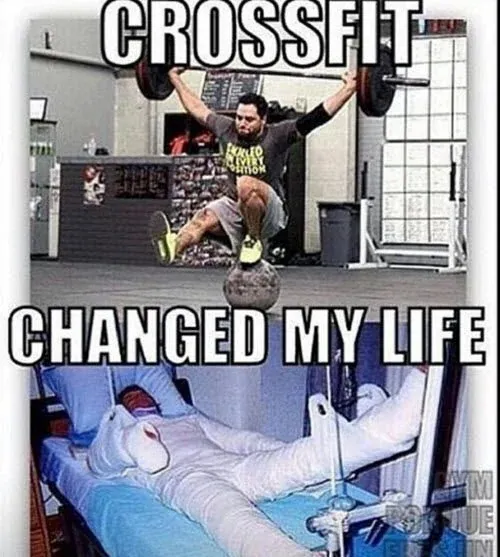
The problem is that "pushing through it" has a pretty bad track record. What starts as a shoulder twinge on Tuesday becomes a full-blown injury by Saturday's competition. What felt like tightness in your knee turns into something that has you scaling every workout for six months.
At Monarch Performance Physical Therapy, we work with CrossFit athletes in Charlotte every single day. These are the injuries we see walking through our door most often, why they happen, and what you should actually do about them.
1.Shoulder Pain
This is the number one complaint we see in CrossFit athletes, and it makes sense.
CrossFit puts your shoulder through an enormous range of motion under load, repeatedly, while you are also tired and trying to beat the clock. The shoulder has to be strong AND stable AND mobile all at the same time.
Studies show the shoulder is the most frequently injured area, with the rotator cuff, labrum, and AC joint being the most common structures involved.
One of the most underappreciated factors in CrossFit shoulder pain is scapular control. The scapula is your shoulder blade, and its job is to position the shoulder joint correctly throughout every overhead movement you do. When the muscles that control the scapula are weak or not firing correctly, the shoulder joint loses its stable base. You end up with the humeral head migrating forward or the shoulder impinging at the top of the lift. Over hundreds of reps, that adds up fast.
Limited thoracic spine mobility compounds the problem. When your upper back does not move well, your shoulder overworks to get the bar overhead. That compensation creates stress on the joint over time, and eventually that stress has a name.
2.Knee Pain
Squats. Box jumps. Wall balls. Lunges. Your knees are basically working a double shift every time you step into the gym.
The most common thing we see is pain around or under the kneecap. Patellofemoral pain. Patellar tendinopathy. Sometimes a meniscus issue that has been building up quietly for months while you pretended it wasn't there.
Here is the thing most athletes miss. Your knee pain probably is not actually a knee problem. It is usually a hip problem or an ankle problem. Something upstream or downstream is changing how load gets distributed, and your knee is just the one sending the complaint emails.
That is why treating just the knee almost never works long term. We look at the whole chain.
3.Lower Back Pain
The back accounts for nearly a third of all CrossFit injuries in the research. Squats and deadlifts were the most commonly associated movements.
But the movement was usually just the trigger, not the root cause.
Lower back injuries in CrossFit are almost always a load management problem combined with a movement pattern that has been breaking down quietly for months. A hip hinge that loses form under fatigue. A core that cannot maintain stability when the weight gets heavy. A lumbar spine picking up the slack for a thoracic spine that does not rotate.
Your body is remarkably good at compensating. So good, in fact, that these patterns can exist for a long time before they become painful. By the time your back is screaming at you after deadlifts, that pattern has usually been there for a while.
Rest manages the symptom. It does not fix the pattern.
4.Achilles and Ankle Issues
Double unders. Box jumps. Running workouts. Your Achilles is absorbing enormous amounts of load in a short period of time, repeatedly, without always getting the recovery it needs.
Achilles tendinopathy is one of the most mismanaged injuries in the athletic population because the instinct is to rest it. Rest reduces symptoms temporarily. But tendon tissue responds to load, not rest. The research on this is very clear. Progressive loading is what actually rebuilds tendon capacity.
If you rest it long enough to feel better and then immediately jump back into double unders and box jumps, you have not fixed anything. You have just reduced the irritability temporarily and set yourself up to repeat the cycle.
5. Wrist Pain
This one does not get enough attention because it feels minor until suddenly it is not.
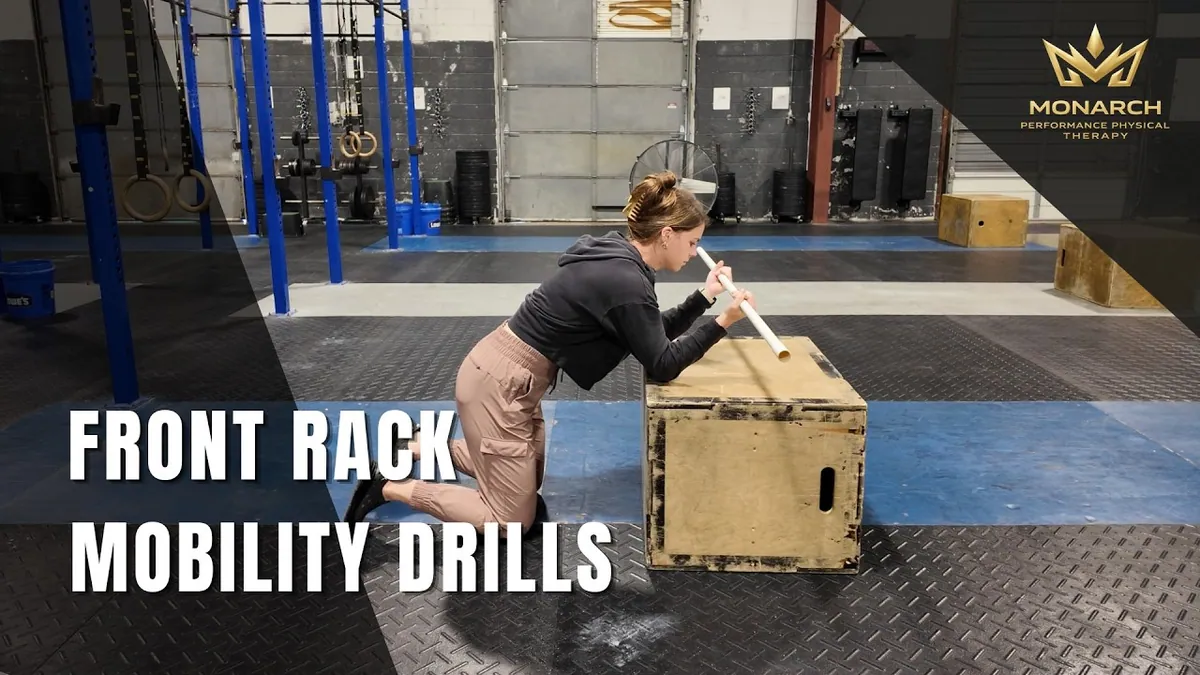
Front rack position, overhead work, push-ups, handstand walks. Your wrists are being loaded in ways that require a specific combination of mobility and strength that most people never actually train.
The obvious culprit is limited wrist extension. The joint gets compressed under load because there is nowhere for it to go. But here is what a lot of athletes miss. Sometimes the wrist is not even the real problem.
If your shoulder or thoracic spine is restricted and cannot move through its full range, your wrist ends up compensating to make the position work. Your body is remarkably creative at finding a way to complete the movement, and your wrist ends up paying the price for a restriction that started somewhere else entirely.
So if you have been stretching your wrists before every workout for months and nothing is changing, that is a sign we need to look further up the chain.
You Do Not Have to Be in Pain to Come In
Here is the part that most athletes overlook entirely.
You do not have to be injured to benefit from working with a sports PT.
CrossFit asks your body to do a lot. Olympic lifts, gymnastics movements, high-rep barbell cycling, plyometrics, all in the same hour. Most athletes have mobility restrictions, movement pattern inefficiencies, or strength imbalances that are quietly shaping how they move through every one of those patterns. Those things do not always cause pain right away. But they do accumulate.
A movement assessment before something goes wrong gives you the ability to address those limitations proactively instead of reactively. It tells you which positions put you at higher risk, what your body needs to handle the demands you are placing on it, and how to build a more durable athlete overall.
The CrossFit athletes who stay healthy year after year are not just lucky. They are paying attention to the things most athletes ignore until it is too late.
What Monarch Is About
We are not going to run you through a cookie cutter program and send you on your way.
Every session is one hour, one patient, one plan — built around you and your goals. As a Doctor of Physical Therapy and Certified Strength and Conditioning Specialist, I look at your injury through both a clinical and a performance lens.
We find the root cause. We get you out of pain. We rebuild your strength. And then we get to work on making you a better athlete than you were before you walked through the door.
If you are a CrossFit athlete in Charlotte dealing with any of these injuries, book a free 15 minute phone call and let's talk about it.
You do not have to keep training around it. Let's fix it.
-Dr. Kiley