You've probably heard the term. Maybe someone at your gym mentioned it, or you've seen it come up while doom-scrolling after a workout. Either way, the questions I get about it are always the same: does it hurt, does it actually work, and is it just glorified acupuncture?
Let me break it down.
What Is Dry Needling?
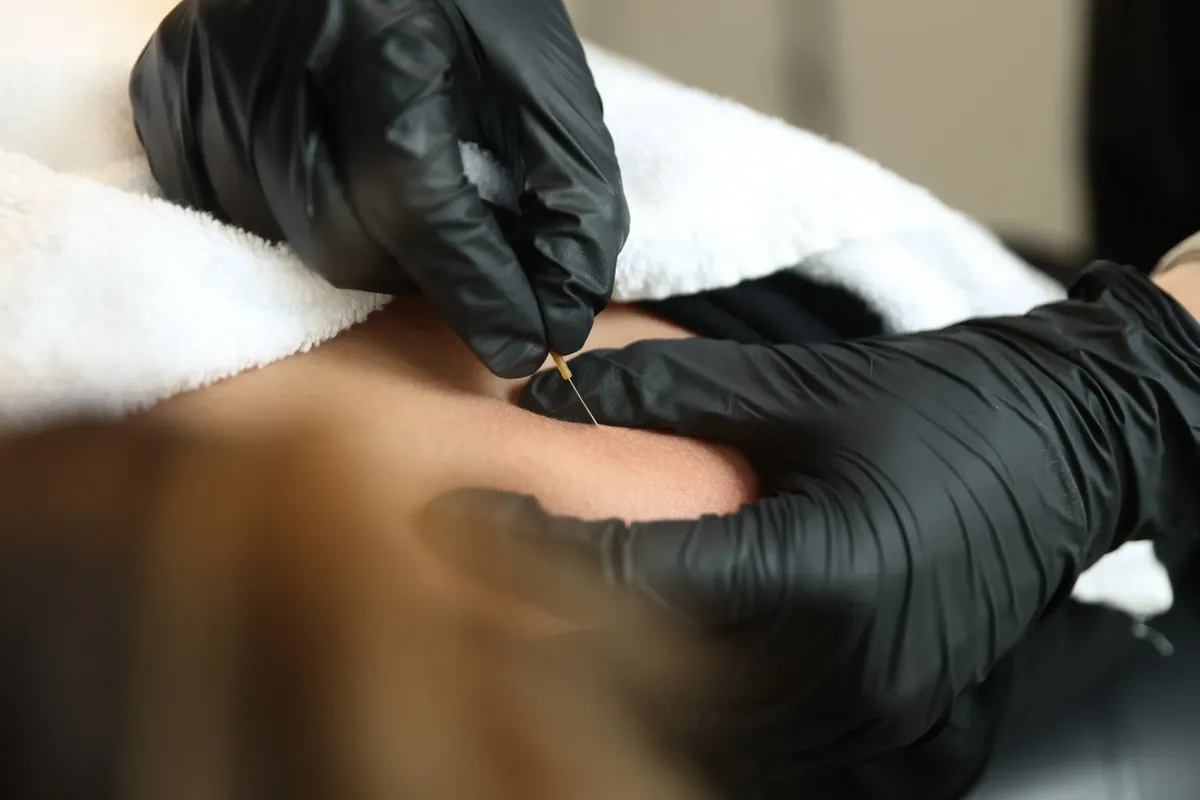
Dry needling is a technique where a licensed provider inserts a thin, solid filiform needle directly into muscle tissue to target what are called trigger points.
A trigger point is a hyperirritable spot within a taut band of muscle. You know that knot in your upper trap that never fully goes away? That's a trigger point. They can cause local pain, referred pain to other areas of the body, and they can genuinely limit how well a muscle contracts and relaxes.
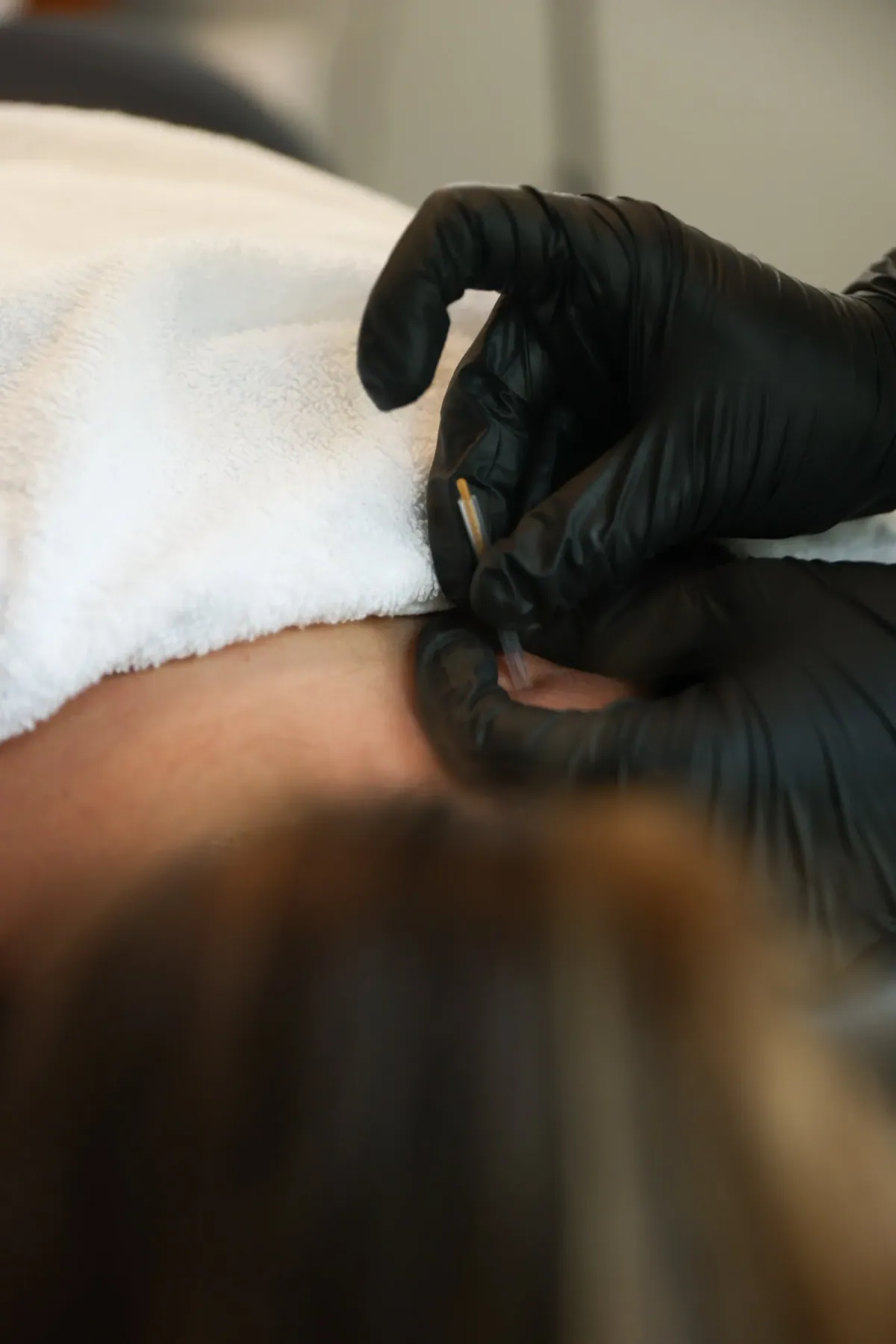
The needle goes in, we get what's called a local twitch response (basically the muscle involuntarily twitches and releases), and that mechanical disruption helps the tissue reset.
No medication is injected. That's what makes it "dry."
Wait, Is This the Same as Acupuncture?
No, and this distinction matters.
Acupuncture is rooted in Traditional Chinese Medicine. It works along energy pathways called meridians with the goal of restoring energetic balance.
Dry needling is based on Western anatomy and neuroscience. The targets are specific muscles and their trigger points, identified through a physical examination. The goal is to restore normal muscle function and reduce pain.
Same tool. Completely different approach.
What Does It Actually Feel Like?
I am not going to lie to you, it does not feel like a relaxing massage.
When the needle hits a trigger point and causes a twitch response, most people describe it as a deep muscle cramp or ache that lasts for a second or two. Some people feel almost nothing. Some people have a stronger response.
After the session, it's common to feel a little sore for 24 to 48 hours, similar to how you feel after a hard workout. That soreness is a sign the tissue responded.
Most people feel significantly better within a day or two.
What Does Dry Needling Actually Do?
Here's where I want to be really honest with you, because there's a lot of overclaiming in this space.
Dry needling is a tool. It is not a cure.
What the research supports is that dry needling can help reduce local and referred pain from trigger points, improve range of motion, and decrease muscle guarding. There is also evidence it can have short-term effects on pain sensitivity at a neurological level.
What it does not do is fix a movement problem. It does not rebuild strength. It does not address why that trigger point developed in the first place.
If you come into Monarch and I use dry needling on your quad, I'm not done after the needle comes out. That window of reduced pain and improved tissue response is exactly when we load the muscle, work on mechanics, and start building capacity back. The needling opens the door. The exercise is what keeps it open.
Who Is a Good Candidate for Dry Needling?
I use dry needling regularly with athletes in the Steele Creek, Ballantyne, Fort Mill, and Charlotte areas, and it tends to work really well for:
Persistent muscle tension or tightness that doesn't respond to stretching or foam rolling alone.
Trigger points that are referring pain to another area, like a hip muscle that's contributing to knee pain.
Post-training soreness or tissue irritability that is limiting someone's ability to train or recover.
Muscle guarding around an acute injury or tendonitis that makes it hard to begin loading.
It's not always the right call for everybody. And it is not always needed. It is simply another tool in the toolbox, and sometimes helps to kickstart rehab in the right direction.
Ready to See If Dry Needling Is Right for You?
If you're dealing with muscle pain, tightness, or a nagging issue that keeps flaring up no matter what you do, schedule your initial evaluation today and let’s take a look!