ACL Rehab: Why Being Cleared Is Not the Same as Feeling Like Yourself
You had ACL surgery. You did your rehab. Your surgeon cleared you at nine months. You went back to your sport.
And something felt off.
Maybe you hesitated on a cut you would have never thought twice about before. Maybe your leg felt strong enough but your brain would not let you fully commit. Maybe you got back on the field and realized that being cleared and feeling like yourself again are two completely different things.
That gap is what nobody prepares athletes for. And it is exactly why I take a criteria based approach to return to sport at Monarch Performance Physical Therapy.
The Problem With Time Based Clearance
The traditional model of ACL rehab is built around timelines. Six months of rehab. Nine months post-op. The number varies depending on who you ask but the logic is the same: after a certain amount of time you will be cleared.
But cleared does not mean ready. And ready does not mean you feel like yourself.
Two athletes who had the same surgery on the same day can look completely different at nine months. One might have full strength, excellent movement quality, and the confidence to cut and land without a second thought. The other might still have a significant strength deficit, altered movement patterns, and a brain that pumps the brakes every time the situation gets athletic.
Clearing them both at the same time because the calendar says so is not a clinical decision. It is a guess. And the athlete who comes back before their body and mind are truly ready is the one who spends the next year feeling like a shell of who they were before the injury.
What Criteria Based Return to Sport Actually Looks Like
Criteria based return to sport means that before an athlete is cleared to return, they have to demonstrate objective benchmarks across multiple categories. Not just feel good. Not just hit a certain date. Actually demonstrate readiness through testing.
The categories I look at include strength, movement quality, functional performance, and psychological readiness. Every single one of them matters. Missing the mark in any one area means the athlete is not ready, regardless of how many months have passed.
Test Don’t Guess
This is the piece that most rehab programs skip entirely and it is arguably the most important.
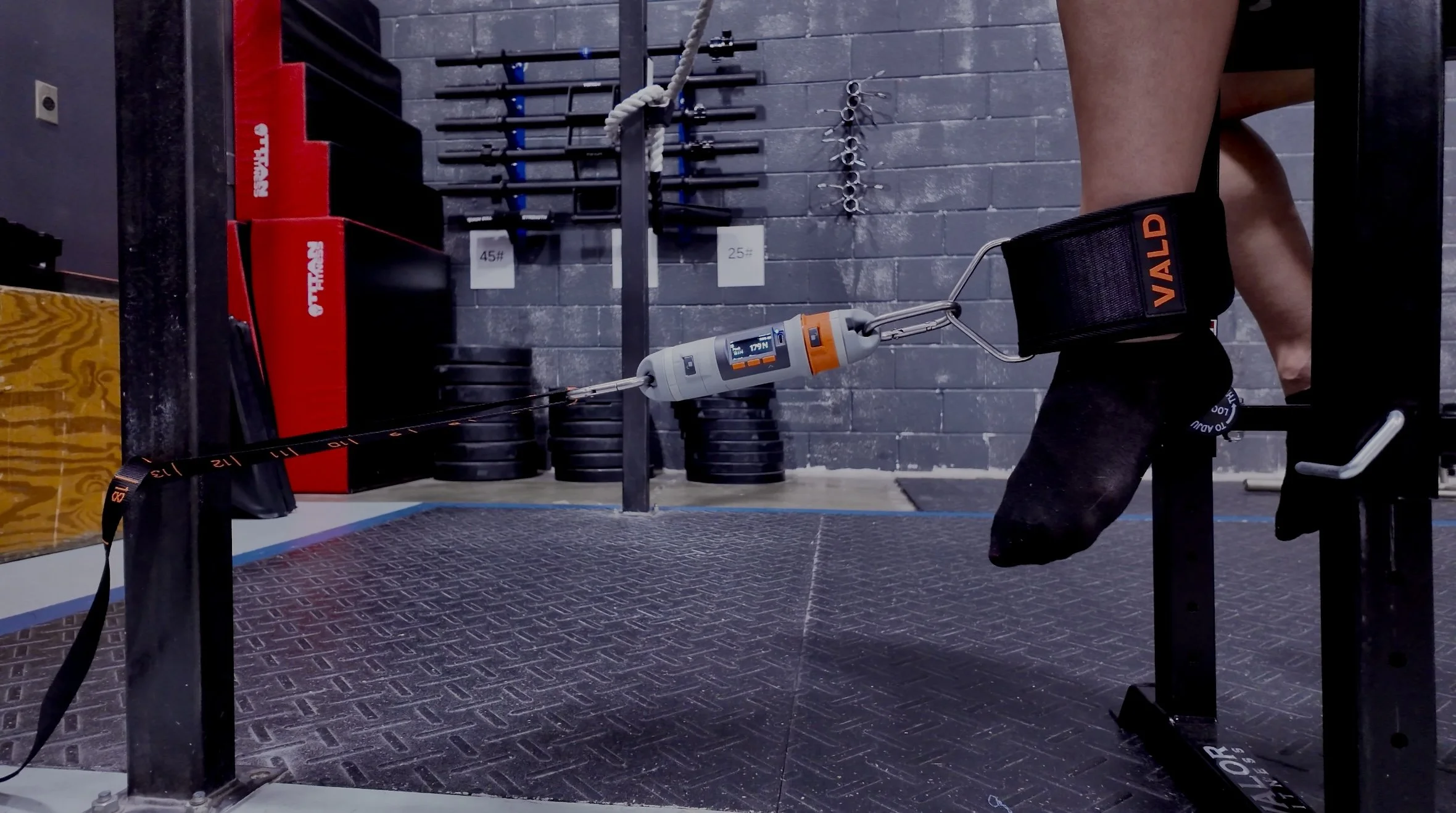
I use a handheld dynamometer to objectively test quadriceps and hamstring strength on both legs. This gives me a limb symmetry index, or LSI, which is simply a comparison of the injured leg to the uninjured leg expressed as a percentage. This removes all the guesswork. You either hit the number or you do not.
The thresholds I use are specific and non-negotiable. An athlete needs to demonstrate at least 70 percent LSI on both quad and hamstring testing before we start a thorough return to run program. To return to full sport, the standard goes up significantly. I want to see at least 90 percent LSI, and ideally as close to 100 percent as possible, before an athlete is cleared for unrestricted return to competition.
Why does hamstring strength matter specifically? Because the hamstrings are one of the primary dynamic stabilizers of the knee. They work alongside the ACL to control anterior tibial translation. An athlete with strong quads but weak hamstrings is putting their knee at risk on every single stride and every single landing. Testing both is non-negotiable.
Without objective testing you are guessing. With it you have a number, a benchmark, and a clear line between not ready and ready.
Hop Testing
Alongside strength testing, functional hop tests give me a picture of how the athlete is actually using their leg under dynamic loading conditions. The most commonly used hop tests in the research include the single leg hop for distance, the triple hop for distance, the crossover hop, and the six meter timed hop.
Each of these tests a slightly different quality: power, confidence, control, and speed under load. An athlete can look strong on the Dynamo but still show compensatory patterns during hop testing, which tells me the nervous system has not fully caught up to the strength gains yet. Both pieces of information matter and together they give me a much more complete picture of where the athlete actually is.
The LSI threshold for hop testing mirrors strength testing. I want to see at least 90 percent symmetry before clearing for sport.
Movement Quality
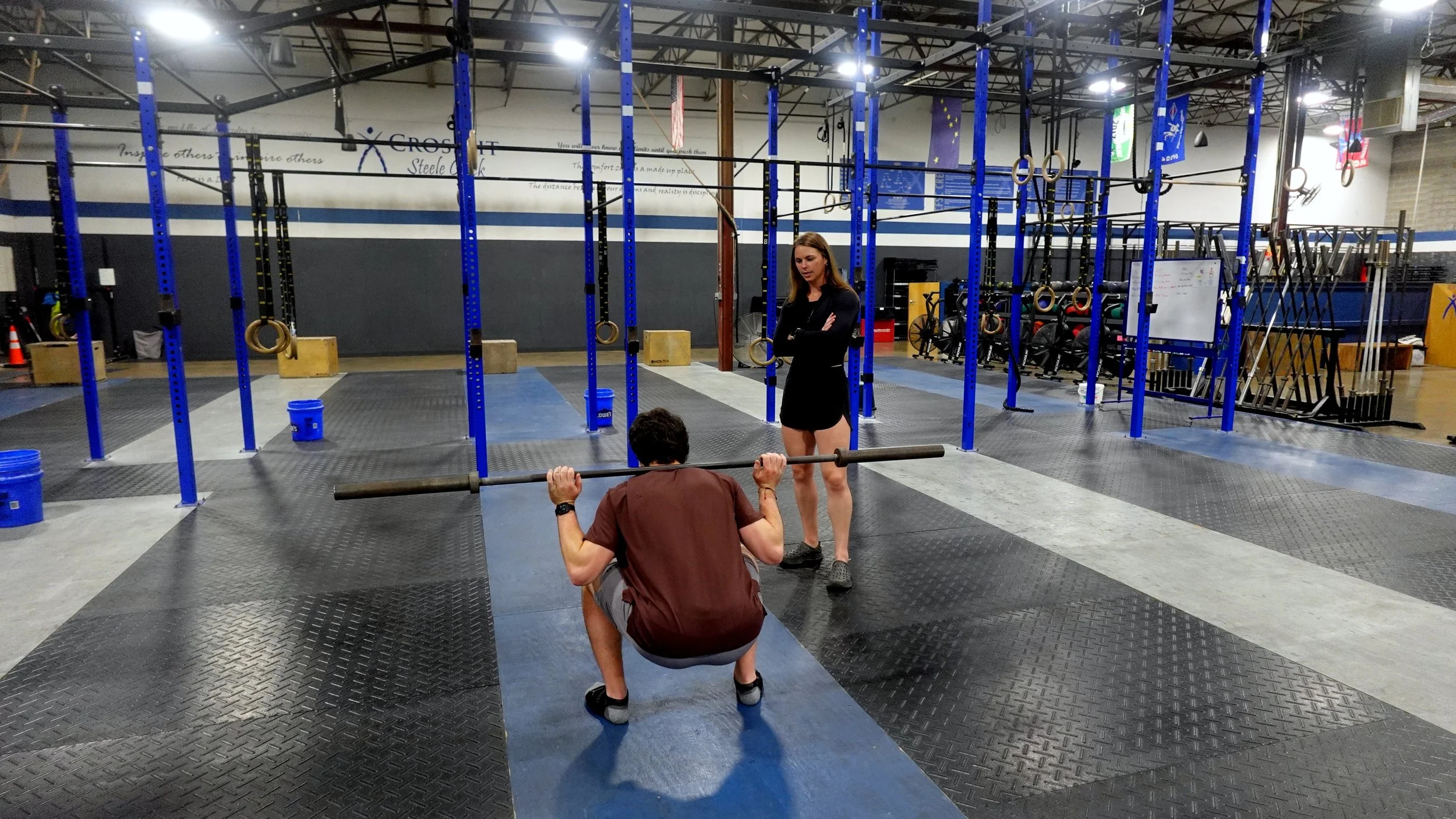
Numbers alone are not enough. I also want to see how the athlete moves under fatigue and under conditions that replicate sport demands.
Does the knee cave when they land from a jump? Do they avoid loading the injured leg during a cutting movement? Is there hesitation or asymmetry during deceleration? These movement patterns matter because they tell me whether the neuromuscular system has actually adapted or whether the athlete is compensating in ways that are going to hold them back when they get back to competition.
An athlete who tests well on the Dynamo but still collapses into valgus on every single leg landing is not ready to return to sport. The numbers and the movement have to match.
Psychological Readiness
This one gets overlooked constantly and it should not. Fear of re-injury is real, it is measurable, and it is one of the strongest predictors of whether an athlete actually feels like themselves when they get back.
I use the ACL-RSI, a validated psychological readiness tool, to assess where an athlete is emotionally and mentally before clearing them. An athlete who scores low on psychological readiness is more likely to move protectively, hesitate at critical moments, and ultimately never fully return to the player they were before the injury, regardless of what their strength numbers look like.
That hesitation you feel on a cut. That split second where your brain pumps the brakes. That is not a weakness. That is a measurable, addressable part of the rehab process. And ignoring it because the calendar says you should be ready is one of the biggest mistakes in traditional ACL rehabilitation.
Addressing psychological readiness is part of the rehab, not an afterthought.
What This Means for You
If you are currently in ACL rehab and your program has never mentioned limb symmetry index, has never strength tested your quad, and has never talked about hop testing or psychological readiness, you are missing critical pieces of the return to sport picture.
That does not mean you need to start over. It means you need someone to run the tests, establish where you actually are, and make sure the decision to return to sport is based on your body and not a calendar.
If you have been cleared to return to sport but something still does not feel right, trust that feeling. It is telling you something. The goal of ACL rehab is not just getting back on the field. It is getting back to feeling completely like yourself on the field. Confident, explosive, and not thinking about your knee at all.
That is the standard I hold every ACL athlete to at Monarch Physical Therapy. If you are in the Charlotte area and you are not there yet, book your ACL evaluation today. Let's figure out what is standing between you and feeling like yourself again.